
Roleplay overview
Live voice practice against a buyer built from your CRM, your call history and live company signals.
Reps practise the meeting before they walk into it. Taizen builds the buyer from your CRM, your call history, and live signals about their company, then runs a voice roleplay and scores it against your rubric.
It is a live voice conversation, not a chat. The buyer interrupts, goes off script, and pushes back — because a mock where the buyer waits politely for the rep to finish their pitch teaches the wrong thing.
The three tabs
Roleplay in the sidebar has three tabs:
| Tab | What it's for |
|---|---|
| Bots | The library of AI buyers. Search by name, company or title; filter by Customers, Prospects, Synthetic, industry, company or job title |
| Calendar | Your upcoming external meetings, so you can prep for a specific one |
| Meetings | Saved meeting setups, including multi-stakeholder ones |
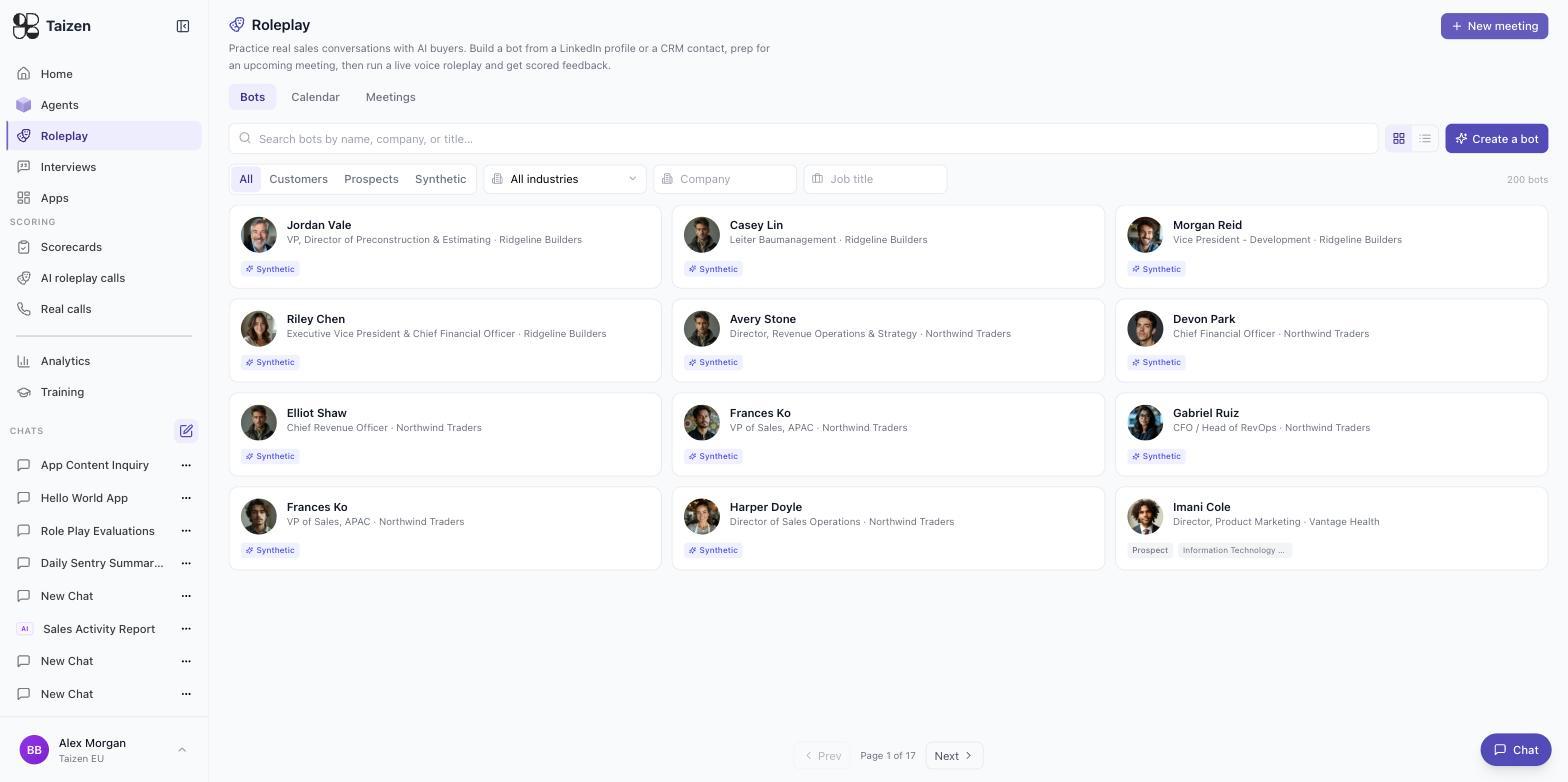
Bots
A bot is one AI buyer, with a name, a job title and a company. Three kinds:
- Customers — built from real accounts you already work with
- Prospects — built from CRM contacts in open deals
- Synthetic — generated personas for an industry and role, when you want practice without tying it to a live deal
See build a bot.
Meetings
A meeting is prep for one specific upcoming conversation: which buyers are in the room, what the scenario is, what mood they're in. Multi-stakeholder meetings are supported — a champion who wants speed and a CFO who guards budget behave differently in the same call, which is the whole point.
See meetings and prep.
Sessions
A session is one recorded roleplay. It's scored against a scorecard, replayable with the transcript, and shareable with a manager or a peer. Sessions appear under Scoring → AI roleplay calls with their score, length and date.
See run a session and scores and feedback.
Where roleplay fits
- Before a real call — prep against the actual buyer you're about to meet (meetings)
- During ramp — a training plan sequences scenarios from friendly to hostile, with a passing score required to unlock the next stage
- After a loss — a drill built from the objections the buyer actually raised in their win/loss interview
The scoring connection
Practice and real calls are scored on the same rubric. That's deliberate: it's the only way to tell whether the drilling changed how the rep sells or only how they perform in a mock. See scoring overview.
Run one session yourself before rolling this out. Managers who have felt a hostile-buyer roleplay brief their team completely differently from managers who have only read about it.