
Scores and feedback
Reading a session score, replaying the moment behind a rating, and sharing a session.
A session is scored against the scorecard it was run with. The score exists to start a conversation with a manager, not to be a grade.
Where sessions live
Scoring → AI roleplay calls lists every session in the workspace: the buyer (and every stakeholder if it was a multi-person room), the company, the score, the length and the date. Filter by Scored, Not scored, or by score range.
A rep's own sessions are also on their Home screen under recent AI roleplay sessions.
Reading the score
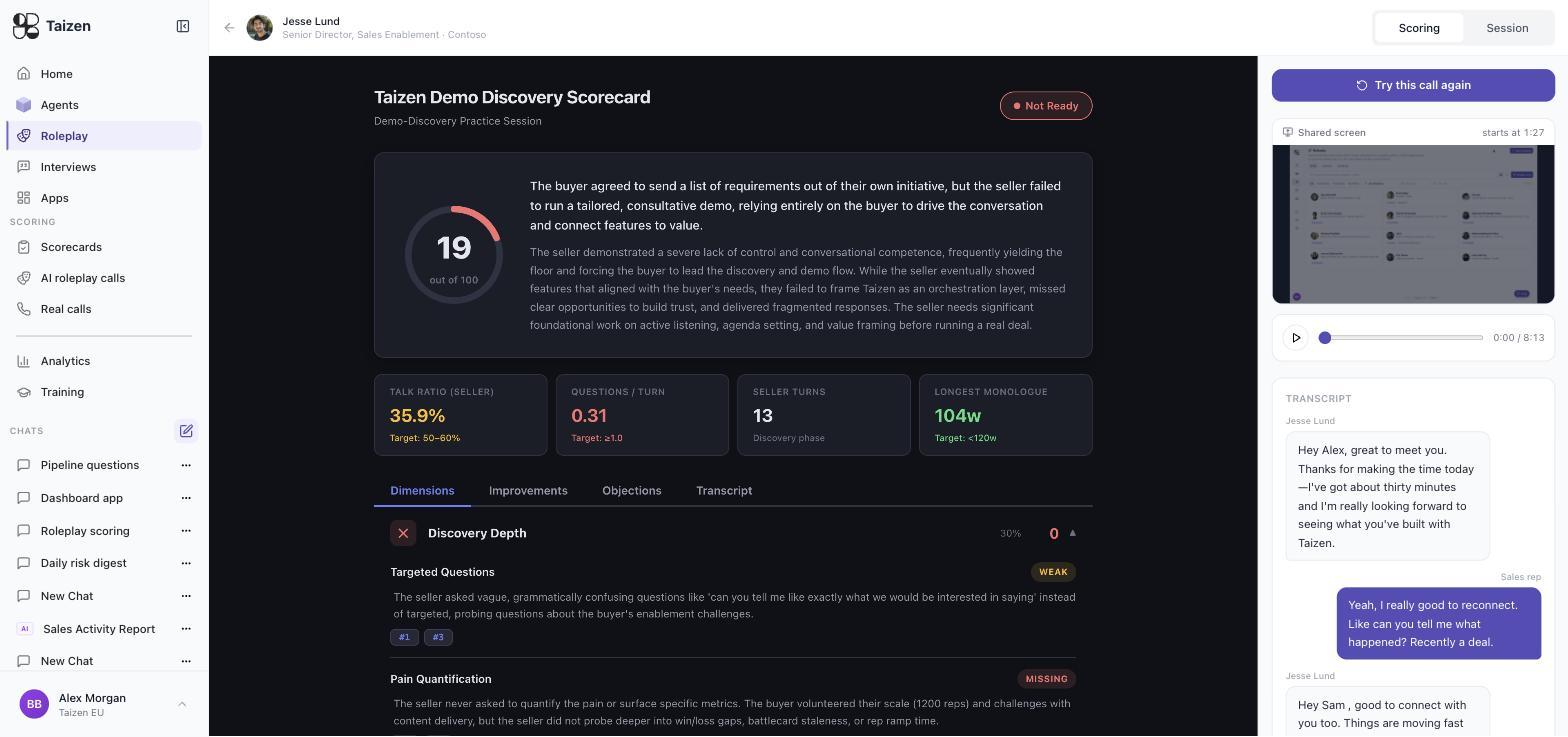
The review page gives you a score out of 100 with a one-paragraph verdict, then four call metrics measured
against targets — talk ratio, questions per turn, seller turns and longest monologue — and tabs for
Dimensions, Improvements, Objections and Transcript. Each dimension shows its weight and its
sub-criteria rated (WEAK, MISSING) with numbered evidence chips that jump to the moment in the transcript. The
recording, including any shared screen, plays alongside.
Three things to read, in this order:
- The dimensions, not the total. A total of 23 tells you nothing actionable. "Objection handling 6, communication rapport 50" tells you exactly what to work on.
- The evidence. Every rating cites the moment in the transcript it came from. Read the citation before you accept or argue with the number.
- The transcript around that moment. Replay it. What the rep said and how the buyer reacted is the coaching material; the number is just the index into it.
Scoring is built to be strict. Sessions fail, and a failing score with evidence is more useful to a manager than a generous one. A rep who scores 19 on their first hostile-buyer roleplay is normal.
Replay
Sessions are recorded and replayable with the transcript alongside. Use replay for the two or three moments the score points at, rather than re-listening to the whole call — nobody has time for that, and the specific moment is where the learning is.
Coaching from a session
What works, in order:
- Pick one dimension. The lowest one, or the one that matters most for the rep's next real call.
- Play the moment. Let the rep hear it.
- Ask what they'd do differently, before you tell them.
- Re-run the same scenario. Same bot, same scorecard, so the comparison is real.
What doesn't work: sending a rep a score with no conversation, or coaching all five dimensions at once.
Sharing a session
A session can be shared — with a manager, a peer, or anyone who needs to hear it. Shared links are managed under Settings → Shared links, where you can see what's been shared and revoke it.
Sharing a rep's failing session outside their management line is a fast way to kill adoption. Ask first.
Practice vs. real
The same scorecard runs against real customer calls under Scoring → Real calls. Put a rep's practice scores next to their real-call scores on the same dimensions:
- Both climbing — the drilling is working.
- Practice climbing, real flat — they're learning to pass the bot, not to sell. Change the scenario, not the rep.
- Real climbing, practice flat — check the practice scenario is actually the situation they face.
See score real calls and training performance.